The Renaming Ceremony
In 2024, we sailed her home from Turkey — a long voyage across the Mediterranean and up through European waters to Stockholm. She was called Caradue then, and that was the name she carried as she found her way into our lives.
Then came the winter, and the months of renovation that followed. We stripped things back, fixed what needed fixing, and slowly got to know her the way you only can when you've spent hours polishing her. By the time summer 2025 arrived, one thing had become clear to both me and my father Arne: she deserved a proper name. A family name.
We chose Iris.
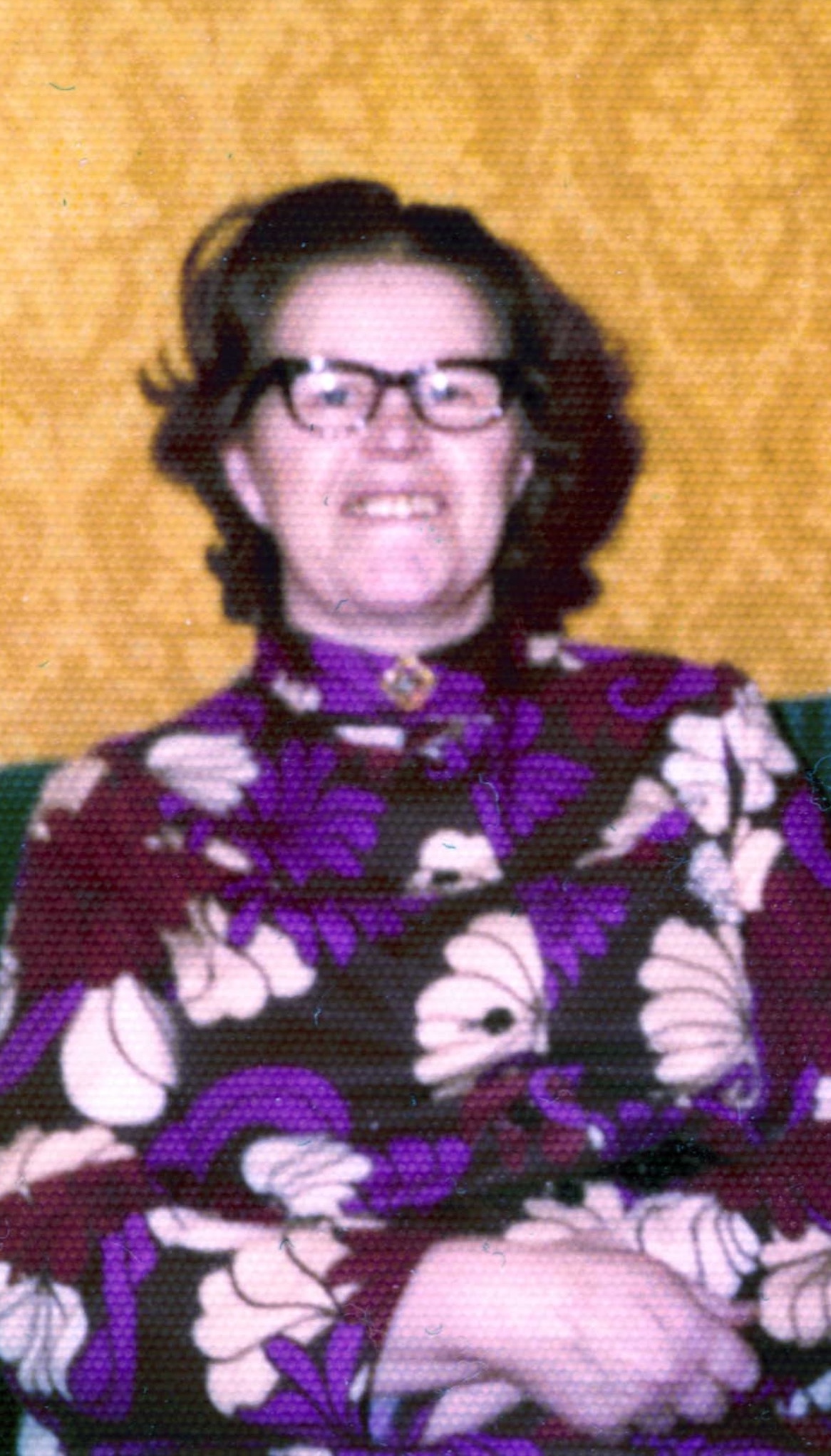
Iris was Arne's mother — Ninnie Iris Solvig Karlsson, born in 1920. She was a very caring woman, warm and steady, and she ran a tight ship in her own way. Well organized. Always present. She had a sharp eye for detail, and a deep sense of fairness — she wanted things to be equal, and treated everyone accordingly. It felt right. The boat has those same qualities when you learn to listen to her.
An Evening at Fotografiska
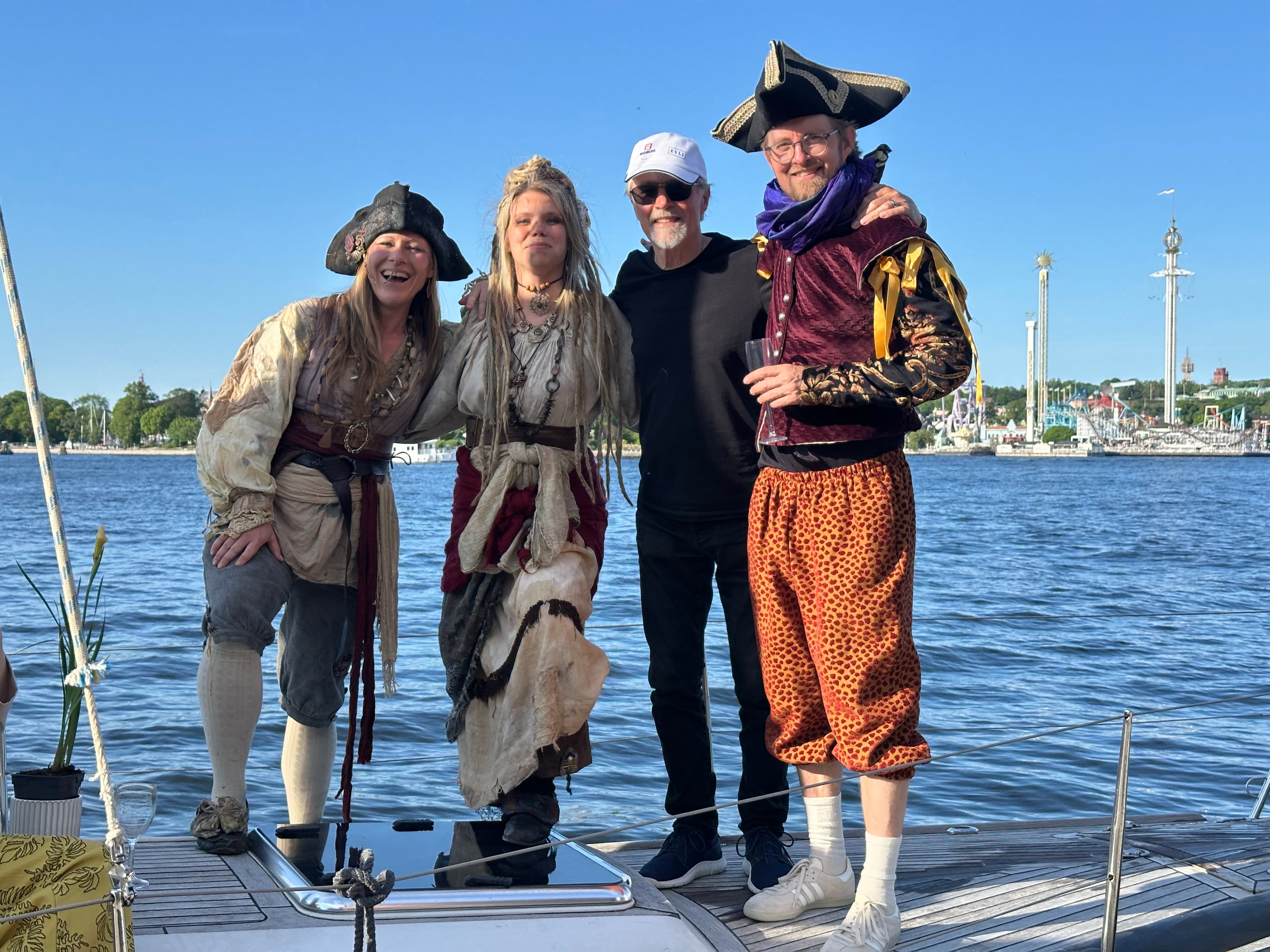
We chose a warm June evening, moored just outside Fotografiska Museet in central Stockholm, with the city skyline behind us and good friends on deck.
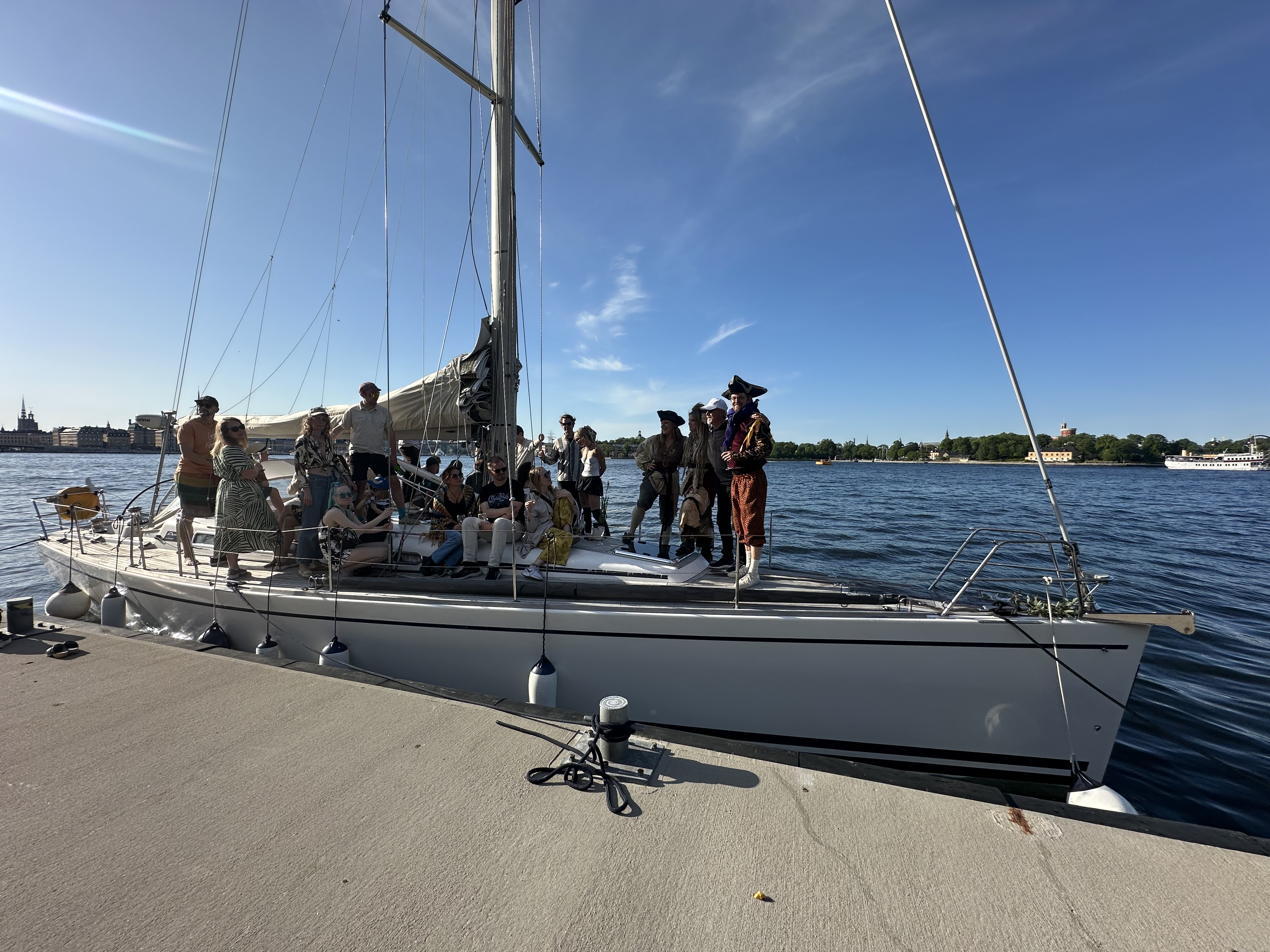
The stars had aligned. My friend Frida and her pirate band Ye Banished Privateers were playing a concert nearby that same evening — and the day before, we'd made a plan: just before they went on stage, they would come aboard. In full costume. And so they did.
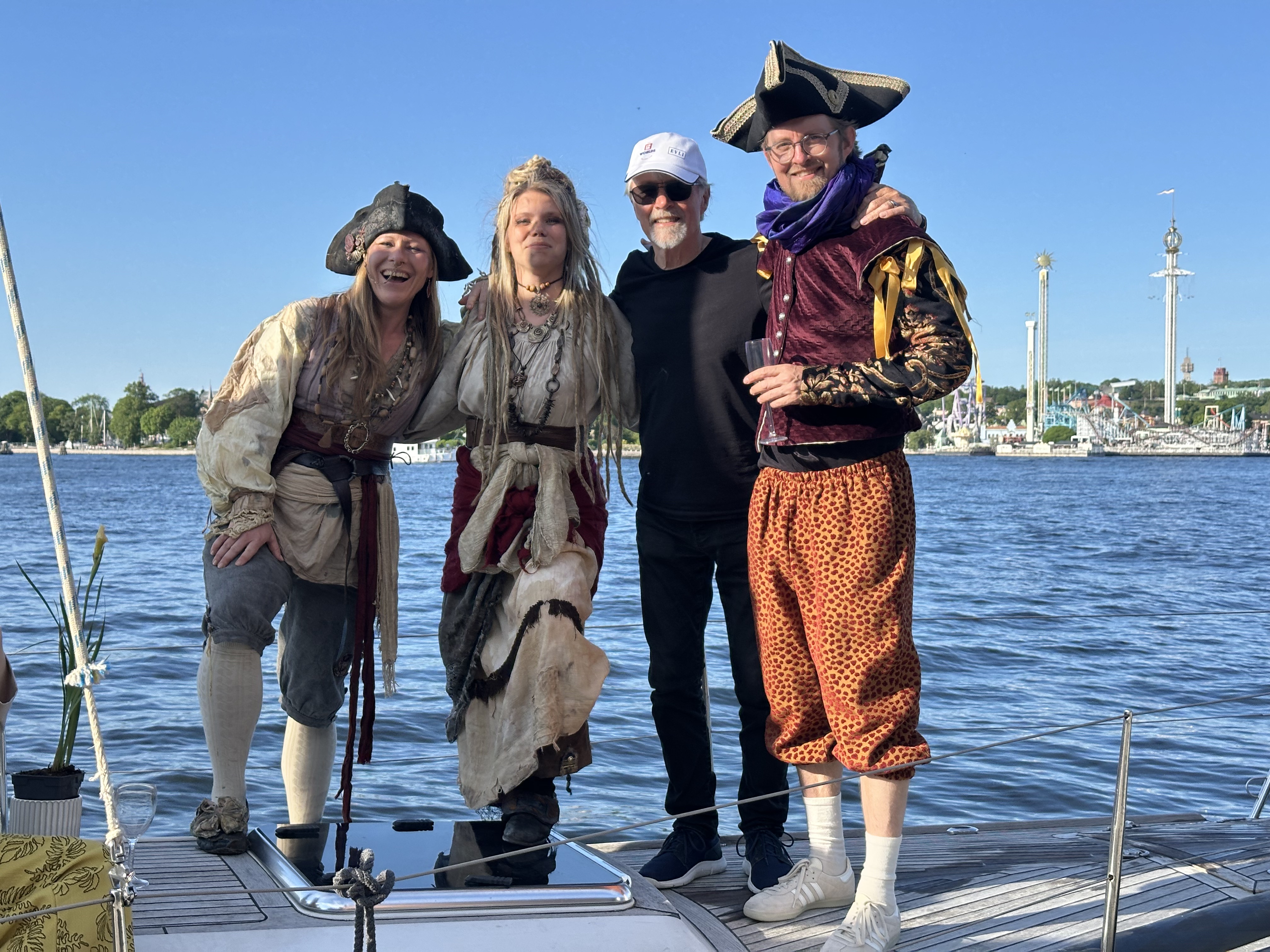
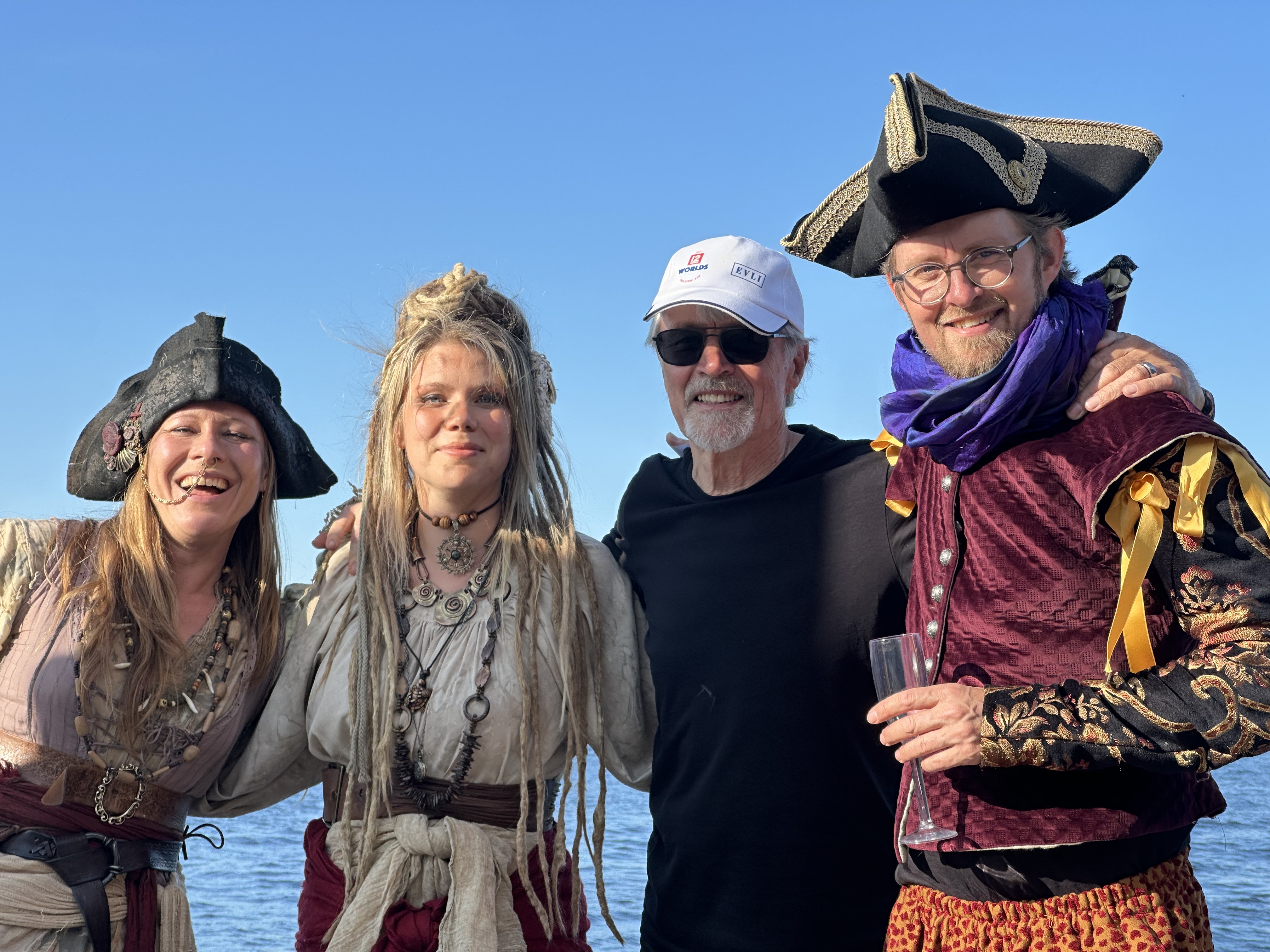
We couldn't have asked for a better crew of officiant pirates.
Why the Ceremony Matters
Poseidon is the mighty Greek god who rules the seas. The Romans called him Neptune. In the Norse tradition, sailors prayed to Njord. In Haiti, he is known as Agwe. Different names, different traditions — but the same force that governs the water beneath every hull.
Poseidon was known for his terrible temper, and if you travel on his seas, it is wise to have him on your side. And he keeps a register. Every vessel that sails his waters is recorded by name. To change a boat's name without his blessing is to court disaster: he won't know who you are, and he won't be inclined to protect you.
So before we could call her Iris, we had to do three things properly: remove the old name from his records, enter the new one, and then introduce that new name to each of the four wind gods. Only then would she truly be ours — and his.
Part One: The Un-Naming
First came the erasure. Every trace of "Caradue" was removed — from the logbook, from the binders, from every document on board. The papers went into the car. The name ceased to exist on the boat.
Then we took a metal ingot and wrote the old name on it in water-soluble ink — the last physical record of who she had been.
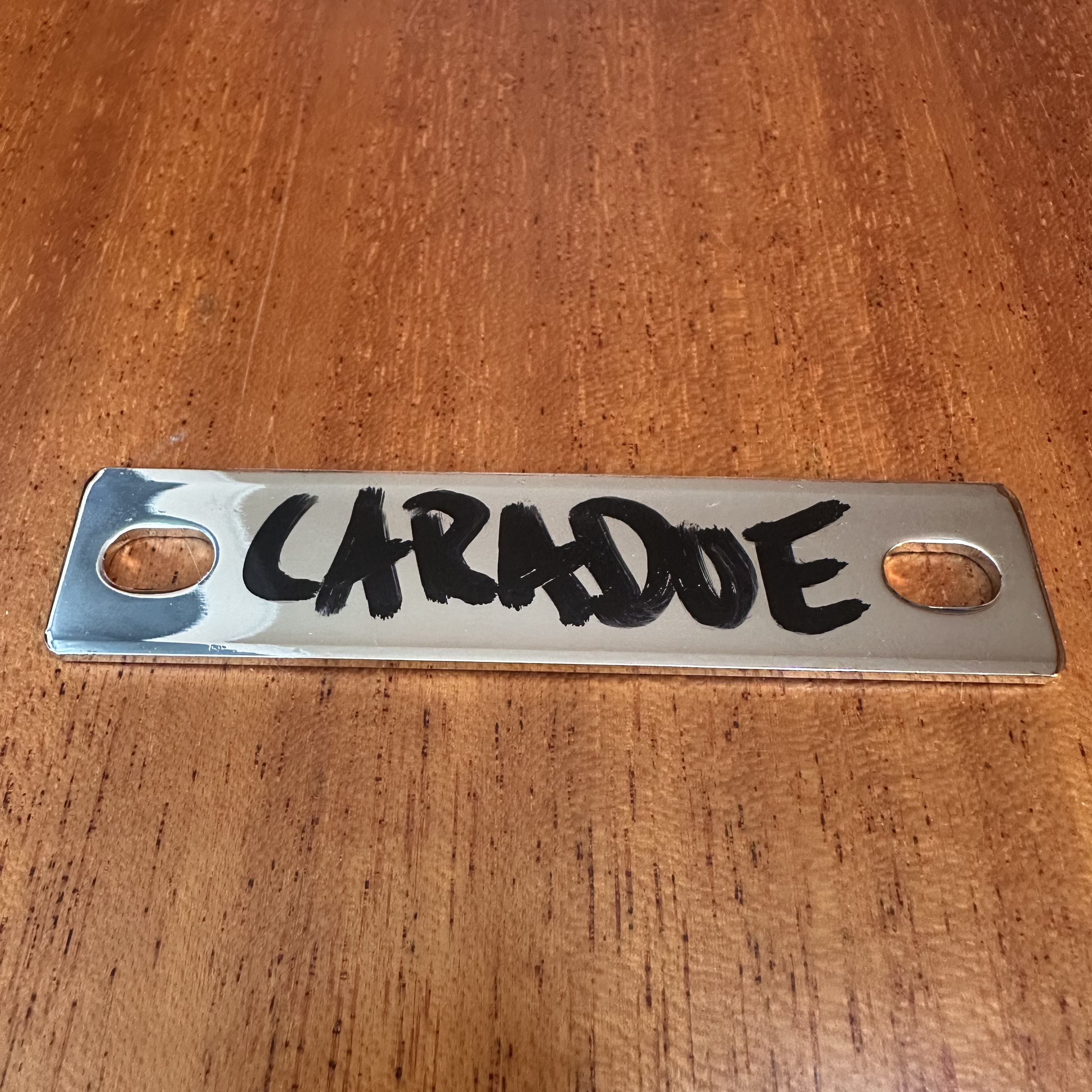
We gathered at the bow, rang the bell, and invoked Poseidon — and through him, Neptune, Njord, and Agwe — asking for his attention and his grace.
O mighty and great ruler of the seas and oceans, you to whom all vessels and all who dare venture upon your vast realm pay homage: hear our voice. We stand here with the boat that once bore the name "CARADUE." With reverence and gratitude, we thank you for the miles she has sailed.
Then came the appeal: to strike the name from his register, to let it dissolve back into the timeless mists of the tide. As a token of that request, we released the ingot overboard — carrying the name "Caradue" with it, to be dissolved and erased by the sea.
A libation of port was poured from east to west, offered to Poseidon and those at his side. The rest was shared among the guests.
With that done, the boat was declared nameless.
Part Two: The Proclamation
The bell rang again.
We called upon Poseidon, Triton, the Nereids, Njord, Agwe, and all the spirits of the sea — and asked them to take note, and to remember this vessel, henceforth and for all time known as:
Iris.
Frida opened the second bottle — champagne — and poured it at the bow. We asked for Poseidon's blessing: to protect her, to guide her with his mighty arm and trident, and to ensure safe and swift passage on all her voyages.
Champagne was poured from west to east, offered to the sea and everyone watching from its depths.
Part Three: The Four Winds
With Iris named, we turned to the winds.
O mighty rulers of the winds, through whose power our fragile ships travel the wild and faceless deep — we ask you to grant this worthy vessel Iris the benefits of your gift, and to ensure your gentle service in accordance with our needs.
To the North — champagne thrown toward Boreas, ruler of the north wind: Grant us permission to use your mighty powers, and spare us forever the lash of your icy breath.
To the West — champagne thrown toward Zephyrus, ruler of the west wind: Grant us permission to use your mighty powers, and spare us the lash of your wild breath.
To the East — champagne thrown toward Eurus, ruler of the east wind: Grant us permission to use your mighty powers, and spare us forever the lash of your mighty breath.
To the South — champagne thrown toward Notus, ruler of the south wind: Grant us permission to use your mighty powers, and spare us forever the lash of your scalding breath.
She Is Iris
With the winds addressed and the sea notified, there was only one thing left to do.
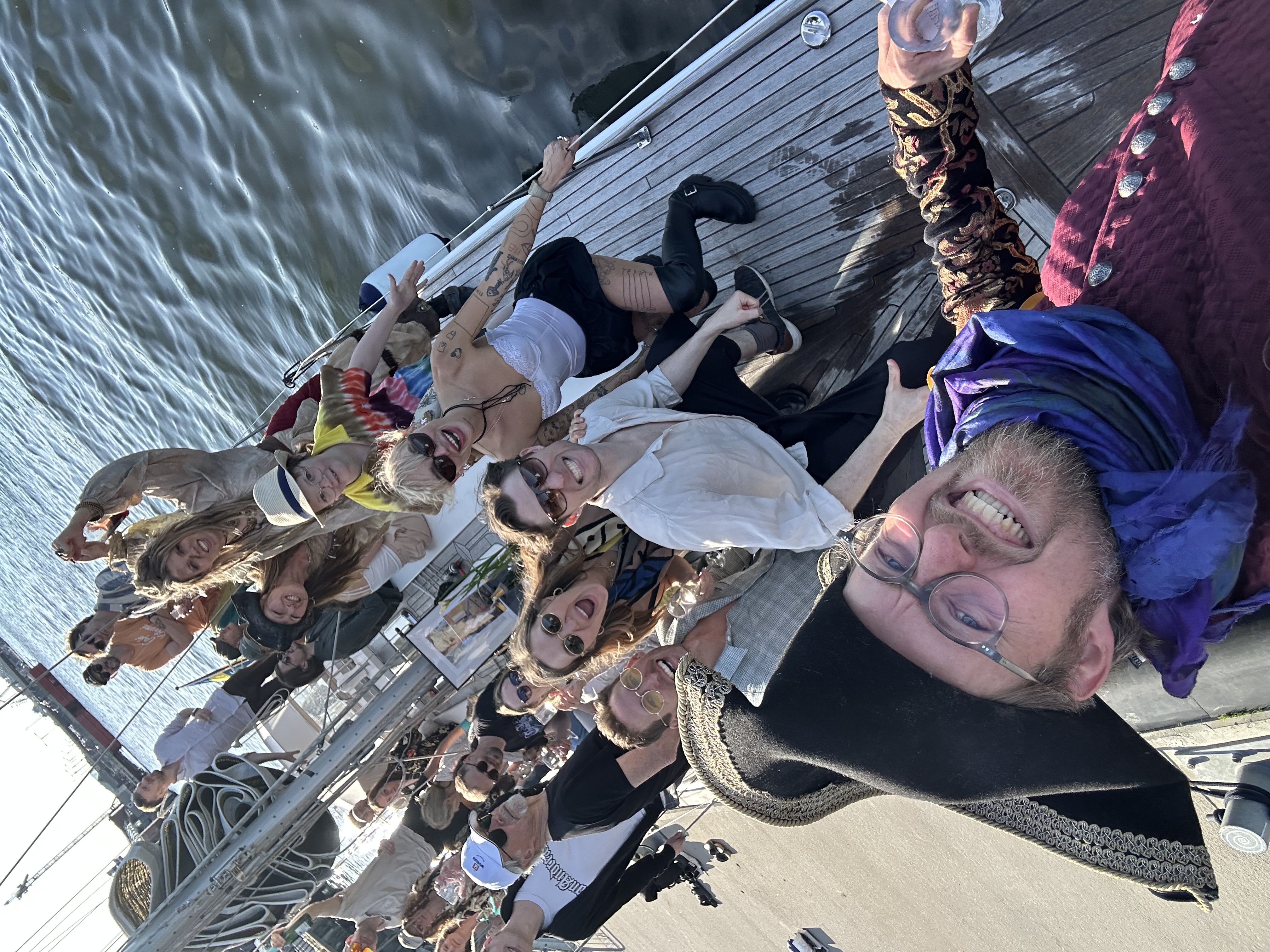
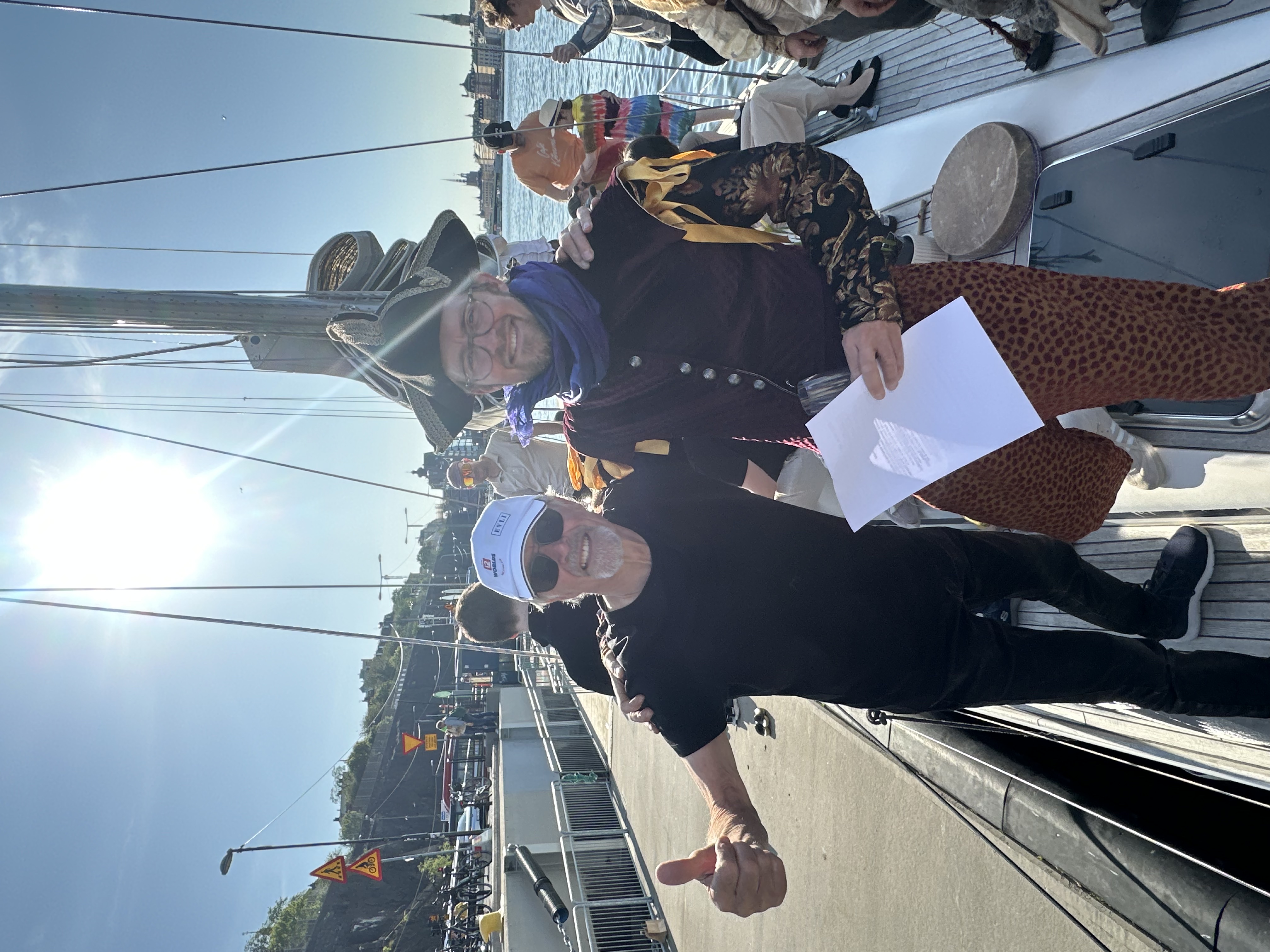
We raised our glasses and drank to her new name.
She is Iris. She always was, really — we just had to find it.
Fair winds. — Marcus & Arne